"If I were to be remembered for anything, I hope it would not be the titles I held — but the people I helped rise." There is a question that quietly haunts every leader who has ever cared: Did it matter? Not the strategy decks, not the quarterly reviews, not the industry accolades — but the quieter,... Continue Reading →
Chapter 33 : Leading Teams Through Financial Duress: A Guide to Resilient Leadership

In times of financial duress, leadership becomes both a challenge and an opportunity. Economic downturns, budget cuts, or sudden financial crises can test the resilience of any organization. However, effective leadership during these periods can stabilise a team, inspire innovation and drive recovery. Here are key strategies for leading teams during financial hardship: 1. Embrace... Continue Reading →
Chapter 32 : Collaborating Across Borders: Building Credibility and Delivering Excellence

When working with a multi-geography team of clients and internal stakeholders, it’s essential to navigate cultural, time zone, and communication differences effectively. Here’s what to keep in mind and ways to build credibility and ensure optimal delivery: Key Considerations: Cultural Sensitivity: Be aware of cultural norms, communication styles, and decision-making preferences. Avoid assumptions; embrace diversity... Continue Reading →
Preparing for Tomorrow: Challenges GCCs Must Address Today

In a world that is evolving at an unprecedented pace, businesses must anticipate future challenges and plan strategically to remain competitive. Global Capability Centers (GCCs), which serve as innovation hubs and operational anchors for multinational corporations, face unique challenges in securing their talent pipeline, building brand visibility, and evolving their work models. These are the... Continue Reading →
Chapter 31: Cultural, Technological and Financial Integration Due Diligence When Acquiring a Brand

Acquiring a brand is a complex process that involves several strategic considerations. When evaluating a potential acquisition for cultural and technological alignments, here are some key elements to keep in mind: 1. Cultural Alignment Values and Mission: Ensure that the target brand's core values, mission, and vision align with those of your organization. Misalignment can... Continue Reading →
Chapter 30 : Strategies to Improve Your Bottom Line

Improving the bottom line, or net income, is essential for businesses aiming to increase profitability and sustain long-term growth. The bottom line represents the final profit after all expenses have been deducted from revenue. Enhancing it involves increasing revenue, reducing costs, or combining both. Here are some effective strategies to improve your bottom line: 1.... Continue Reading →
Chapter 29: Strategies to Improve Top Line

Improving the top line, or gross revenue, is a key focus for businesses aiming to grow and succeed in competitive markets. The top line represents a company's total sales or revenue before any deductions, making it a crucial indicator of business health and growth potential. Companies can employ strategies tailored to their specific industry, market... Continue Reading →
Chapter 28 : Driving Business Success through the Optimal Use of People, Process, Tools, and Technology
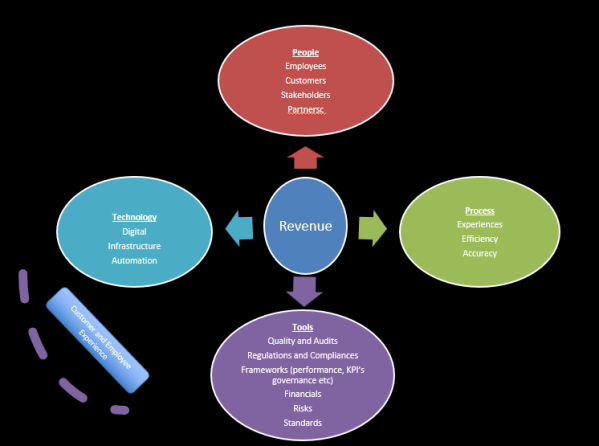
Here is a framework one can use to handle the attributes of a business entirely. Every business relies on revenue as the core driver of success. Achieving this success requires the optimal utilization of four key elements: People, Process, Tools, and Technology. When used effectively, these elements enhance both Employee Experience (EX) and Customer Experience... Continue Reading →
Chapter 27 : How to Begin Your Digital Transformation Journey

In the age of rapid technological advances, digital transformation has become a must-have rather than an option for businesses that want to remain competitive. Nevertheless, launching into a digital transformation journey is a complex venture that demands strategic planning, a clear vision, and a comprehension of opportunities and challenges. Recommended steps basis my experience. Defining... Continue Reading →
Chapter 26: Incentive Plans – PLIP

A profit-linked incentive plan is a compensation strategy designed to motivate employees by tying their financial rewards to the profitability of the company or their specific business unit. Here's an explanation of its key components and benefits: Key Components: Profit Targets: The plan is based on the company's specific profit targets. These targets can be... Continue Reading →
CHRO joining a new company? A recommended plan to succeed.

Developing a comprehensive plan as a Chief Human Resources Officer (CHRO) for a new company involves a strategic approach that aligns with the organization's goals and culture. Here's a step-by-step guide for creating both short and long-term HR plans: Understand the Company's Vision and Objectives: Before crafting any HR plan, it's crucial to grasp the... Continue Reading →
Chapter 25: How to read a financial and a profit and loss statement

Reading a company's financial statements can provide valuable insights into its financial health and performance. Here's a general guide on how to read them: Understand the Components: Financial statements typically include three main components: Income Statement: The company's revenues, expenses, and net income over a specific period. Balance Sheet: Provides a snapshot of the company's... Continue Reading →
Chapter 24 : Risks – inclusions and the need for mitigation

In a corporate sense, risk refers to any potential event or circumstance that could have a negative impact on the achievement of an organization's objectives. Risks can arise from various sources, including internal processes, external factors, and uncertainties in the business environment. These risks may affect different aspects of the organization, such as its financial... Continue Reading →
Chapter 23: Behaviours, Values and Etiquette at Work

Recommendation - (use this as a checklist till it becomes a part of your DNA) Corporate work ethics are essential for keeping yourself on track for longevity and success while fostering a positive and productive work environment. Here are some key ones: Integrity: Acting with honesty and integrity is crucial in the corporate world. This... Continue Reading →
Chapter 22 : How to effectively manage performance in a matrix organisation

Managing performance in a matrix organisation, where multiple stakeholders are involved, requires a comprehensive approach that emphasises clarity, collaboration, and accountability. Here are some strategies to effectively manage performance in such a setting: Clear Performance Expectations: Establish performance expectations for all individuals involved, including reporting and functional managers. Define key performance indicators (KPIs) and objectives... Continue Reading →
Chapter 21 : Hardline vs Matrix reporting, and how to make it work

The superiority of hardline reporting versus matrix reporting depends on the specific context and needs of the organization. Hardline reporting, characterised by a traditional hierarchical structure with clear lines of authority and reporting relationships, clarifies roles, responsibilities, and decision-making processes. This structure can be particularly effective when tasks are routine, authority is centralized, and efficiency... Continue Reading →
Chapter 20: Improving Profitability

Cutting costs and enhancing profitability are vital to any business's success. One of the highest costs in any P&L is staff costs, which again links back to the conversation around culture and how it impacts retention of employees, thereby enhancing credibility through the high quality of work, leading to higher CSAT and, thus, improved revenue.... Continue Reading →
Chapter 19 – Why is a Great Culture so necessary?

Culture curation is central to designing a Great Place to Work because organizational culture largely determines workplace environment and employee experience, which eventually defines the overall success of a firm. We all know culturally aligned organizations are more successful in terms of financials, customer satisfaction, new product innovations, employee trust and more; therefore, if rethinking... Continue Reading →
Chapter 18: How Effective Are Internal Transfers?

I once ran a successful sales program for a telecom company in the USA. I managed 8 teams of 15 members each, while my peers managed 4 teams of 15. My teams had the best sales and were constantly topping the charts. One day, my director asked me to release 1 of my best sales... Continue Reading →
Chapter 17 – Sensitivity around employee exits

Have you received requests where managers have asked you to shorten an employee's notice period and postpone the exit due to perceived damage to the team's structure created by an unresponsive existing employee? Have you also heard of employees not adhering to notice period norms and requesting an exit before their commitments to the organisation,... Continue Reading →
 Curating World Class Cultures